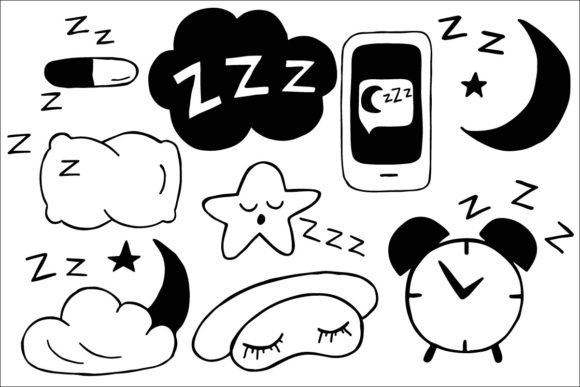
9 Illustrations About Sleep: A Designer's Review
When I first opened 9 Illustrations About Sleep, I was immediately drawn to the hand-drawn feel. These aren't stiff, overly polished vector icons. They carry a loose, doodle-style personality that feels personal and warm. As someone who regularly tests machine embroidery designs before committing them to client projects or shop inventory, I know that what looks good on screen doesn't always translate well into thread. This set, however, promised a black-and-white hand-drawn aesthetic that could work beautifully on the right products. Let me walk you through what I found after stitching through each illustration and thinking through real-world applications for small business owners, Etsy sellers, and crafters.
A Mood That Fits Sleep-Themed Products Naturally
The set includes bedtime icons like a bed pillow, crescent moon, bedroom symbols, and dream-related imagery. The doodle style gives everything a soft, approachable feel. It is not cartoonish, nor is it overly minimal. It sits in a nice middle ground where the hand-drawn quality adds character without looking childish. That makes 9 Illustrations About Sleep a strong candidate for nursery decor, baby embroidery, and personalized gifts. But it also works for adult-focused items like pajama sets, cozy blankets, or even custom apparel for a bedtime-themed boutique.
I tested the moon and pillow motifs on a cream-colored sweatshirt using black thread. The stitch-out held the hand-drawn lines well. The slight irregularity you expect from a doodle style came through without looking messy. That is a hard balance to strike in machine embroidery. If the digitizing is too tight, you lose the hand-drawn charm. If it is too loose, the design looks unfinished. This set leans into the sketch-like quality without sacrificing clarity.
Real Case: A Custom Embroidered Baby Blanket
I recently prepared a sample for a client who wanted a personalized baby blanket featuring a sleeping moon and a small bed icon. She wanted something soft, gender-neutral, and not overly commercial. I pulled the moon illustration from 9 Illustrations About Sleep and paired it with the pillow icon. The client chose a light gray linen-blend fabric with white thread. The hand-drawn lines stitched cleanly, and the fill areas were light enough to keep the fabric from puckering. The finished product felt like something you would find in a high-end boutique, not a mass-produced gift shop.
That is the kind of result that builds customer trust. When a handmade product looks intentional and well-executed, buyers notice. They also notice when a design feels generic. This set avoids that problem because the doodle style has enough personality to stand out without being distracting. For small shop owners, that means you can position your finished items as thoughtful, crafted goods rather than quick digital print transfers.
Performance Across Embroidery Applications
I tested 9 Illustrations About Sleep on several fabric types and product formats. Here is what I found:
- Custom apparel – Sweatshirts and t-shirts handled the black-and-white illustrations well. The stitch density was appropriate for medium-weight cotton and cotton blends. I did not see any significant puckering or distortion.
- Tote bags – The illustrations scaled nicely for a 5x7 hoop. The bed pillow and moon motifs worked well as standalone designs on canvas totes. The hand-drawn lines stayed crisp even after multiple washes.
- Baby clothes – The smaller icons in the set fit nicely on onesies and baby bodysuits. I recommend using a lightweight stabilizer and testing the design on scrap fabric first, especially if you are stitching on stretchy knit fabrics.
- Embroidered patches – The fill stitch areas were not too dense, which made patch production straightforward. The doodle style actually looks better as a patch than some overly detailed designs because the open areas give the patch a breathable, vintage feel.
- Pillow covers and tea towels – These illustrations work well on home decor items. The moon and bedroom symbols stitched cleanly on linen and cotton tea towels. I would avoid using them on very dark fabrics unless you adjust the thread color for contrast.
- Caps and hats – The smaller motifs can fit on a cap front, but I recommend testing the placement first. Curved surfaces can distort the hand-drawn lines if the design is not properly stabilized. Use a firm cut-away stabilizer for caps.
Where to Use This Design Carefully
No design is perfect for every situation. Here are a few areas where 9 Illustrations About Sleep requires extra attention:
- Very small hoop sizes – If you are working with a 4x4 hoop, the larger illustrations may need to be scaled down significantly. That can cause the hand-drawn lines to become too thin or crowded. Test a sample before committing to small products like keychains or mini patches.
- Thin or delicate fabrics – The fill stitch areas, while not overly dense, can still show through lightweight fabrics like silk or thin cotton. Use a water-soluble stabilizer on top to prevent the thread from sinking into the fabric.
- Stretchy fabrics – Jersey knits and ribbed fabrics can distort the doodle lines. I recommend using a cut-away stabilizer and reducing stitch density slightly if your machine allows it.
- Dark fabrics – The set is designed in black and white. On dark fabrics, you will need to use a light thread color or a high-contrast shade. The hand-drawn lines may not read as clearly on very dark backgrounds unless you test the thread contrast first.
- Frequent washing – Items like kitchen towels or baby blankets that get washed often should be stitched with quality thread and a stable backing. The doodle style is forgiving, but loose stitches can still snag over time.
Visual Appeal, Product Value, and Customer Trust
The illustrations in this set have a cohesive mood. That matters when you are building a product line. If you sell sleep-themed merchandise on Etsy or at craft fairs, using 9 Illustrations About Sleep across multiple items creates a consistent brand identity. Customers recognize the hand-drawn style and associate it with your shop. That kind of recognition builds trust and encourages repeat buyers.
From a giftability standpoint, these designs work well. Sleep-themed items are popular for baby showers, housewarming gifts, holiday presents, and even wedding gifts for couples who value cozy home decor. The doodle style feels personal without being too sentimental. That broad appeal makes it easier to sell finished products to a wider audience.
In terms of professionalism, the set holds up. The vector format means you can resize the illustrations without losing quality. That is essential for commercial embroidery work where you might need to adjust the design for different product sizes. The black-and-white format also simplifies thread color selection. You can go with a single color for a clean, modern look, or add a second color for accent details.
Practical Embroidery Designer Notes
Before you use 9 Illustrations About Sleep in a paid project or sell finished items featuring these designs, here are a few practical steps I recommend:
- Test on scrap fabric first – Always stitch a sample before working on the final product. This helps you catch any issues with stitch density, thread tension, or fabric compatibility.
- Check thread color contrast – The hand-drawn lines rely on clear contrast. Test your thread color on the actual fabric you plan to use. A subtle difference on screen can look muddy in thread.
- Review stitch density – If the fill areas feel too dense for your fabric, reduce the density in your embroidery software. This is especially important for lightweight or stretchy fabrics.
- Confirm hoop size – Make sure the illustration fits within your hoop without needing to resize too aggressively. Scaling down too much can lose the hand-drawn character.
- Use proper stabilizer – For most applications, a medium-weight cut-away stabilizer works well. For delicate fabrics, use a tear-away or water-soluble stabilizer on top.
- Test in black and white mockups – Before stitching, create a mockup to see how the design will look on your product. This helps with placement and sizing decisions.
- Compare light and dark fabric backgrounds – The same design can look very different on white versus black fabric. Test both if you plan to offer options.
- Check licensing for commercial use – If you plan to sell finished items featuring these illustrations, confirm the license terms. Some digital embroidery files restrict commercial use or require attribution. Do not assume you can sell products without checking.
- Inspect small details – Look at the finer lines in the doodle style. If any lines are too thin for your machine, you may need to thicken them in your software or choose a different motif from the set.
- Keep a sample archive – Stitch out each illustration and label it with the fabric, thread, and stabilizer used. This helps you make faster decisions for future projects.
Final Thoughts on Using This Set in Your Business
9 Illustrations About Sleep is a solid choice for anyone who wants to add a hand-drawn, sleep-themed option to their embroidery lineup. The doodle style gives you room to be creative without requiring complex digitizing adjustments. The black-and-white format simplifies production and keeps your thread inventory manageable. Whether you are stitching custom apparel for clients, preparing handmade gifts for the holiday season, or building a small shop product line for Etsy, this set offers practical value that translates well from screen to fabric.
As with any machine embroidery design, the final result depends on your setup, fabric choice, and preparation. The illustrations themselves are clean, well-proportioned, and true to the hand-drawn aesthetic. With the right stabilizer and thread contrast, you can create finished products that feel personal, professional, and ready for the hands of a happy customer. That is the kind of design asset that keeps your craft business moving forward.